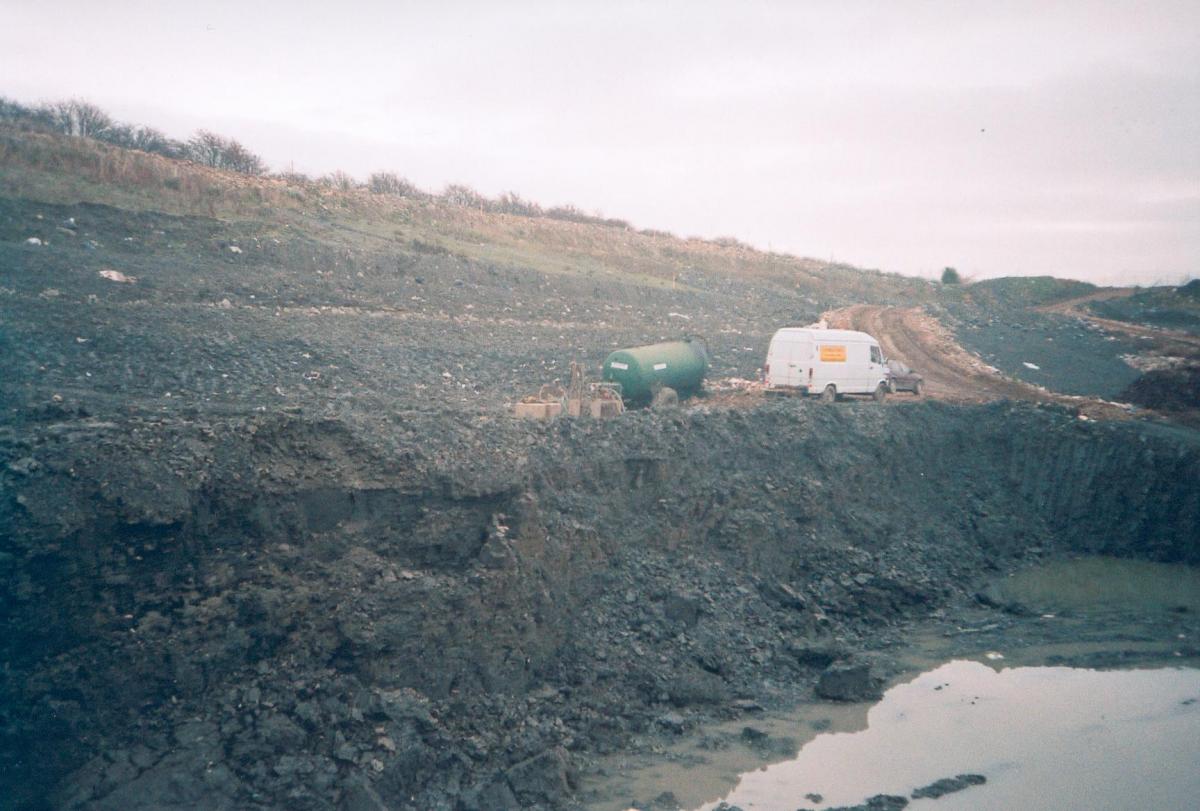
We were approached by Dr Neil Dixon of Loughborough University (now Professor of Engineering) about the possibility of using a pressuremeter to investigate the mechanical properties of municipal solid waste. Most of the work took place at a landfill site in Calvert, Buckinghamshire. The waste was a mixture of residential and commercial residue, not well-sorted, in various stages of degradation and depending on its age could be lightly to heavily compacted.
The primary purpose of the testing was to obtain engineering parameters that would permit the interaction between the body of the waste and the components of the protective barriers to be modelled and quantified.
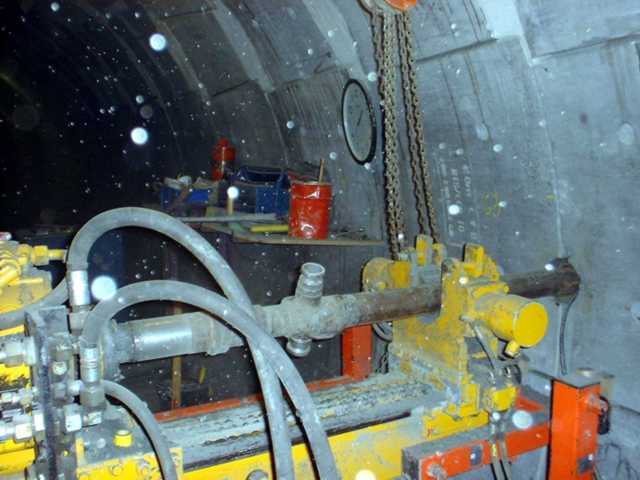
We have at intervals over the last 15 years made visits to the SCK-CEN facility at Mol, Belgium, to carry out pressuremeter testing in the underground research facility HADES. This is a system of shafts and tunnels some 224 metres below ground level in a zone of Boom Clay in a highly plastic condition. The clay has interesting self healing properties when fractured, displays extremely low levels of permeability and offers a possible solution to the problem of the disposal of high level nuclear waste. Since 2000 the facility has been run by an expert group called EURIDICE and pressuremeter testing has been used during the construction of the facility and after to examine the engineering properties of the clay.